First thing we’re making: a pumpkin spice latte!


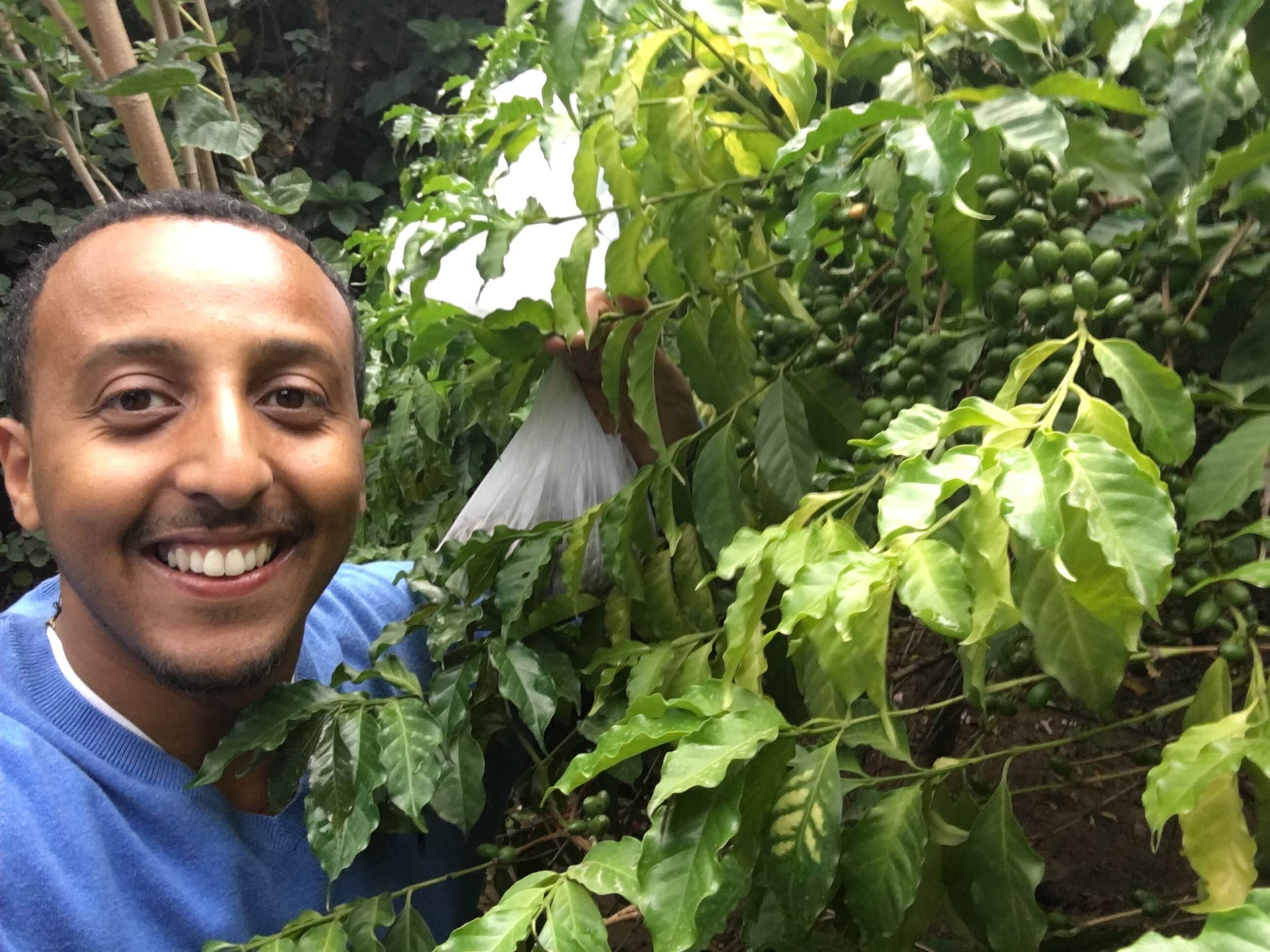
Name: Efrem Fesaha
Pronouns: He/Him/His
Pronunciation: F-Rum Fi-sa-ha
***
Before coffee was a to-go cup or a morning routine, it was a ceremony.
For many East African communities, coffee is not simply consumed. It is roasted in front of guests, brewed slowly, poured in small cups, and shared as a gesture of hospitality. It marks celebration and mourning alike. It is conversation, blessing, and belonging.
That tradition is at the heart of Boon Boona Coffee in Seattle.

Founder Efrem Fesaha was five years old when he moved to Seattle, a city he would grow to love. Most of his life was spent in West Seattle, shaped by both his Eritrean upbringing and the evolving culture of the Pacific Northwest. But it was a later trip to Asmara, Eritrea, that clarified his path.
After experiencing the warmth of Eritrean cafés, where the fragrance of roasting beans fills the air and time seems to slow, he returned home with a vision. He wanted to share East African coffee culture in a way that honored its depth.

“Coffee is not just a drink—it’s a daily pause, and a chance to gather with friends and family.”
The name itself carries history. “Boon” means coffee in Eritrea. “Boona” means coffee in Ethiopia. The word coffee traces back to Kaffa, a region in Ethiopia considered the birthplace of arabica. Boon Boona, in essence, means “coffee” in three languages, a reflection of origin and continuity.
But the company is not only about language or geography. It is about responsibility.

Efrem grew up hearing his parents describe Eritrea with reverence. When he later spent time there himself, he felt compelled to build something that would create meaningful economic impact on the continent.
“This love for Africa is directly the result of my upbringing,” he says. “I wanted to spotlight African producers, create economy on the continent, and make a positive impact.”
Today, Boon Boona sources exclusively from African nations including Ethiopia, Rwanda, Burundi, and Kenya. Many of these farms are small, sometimes just a few trees in a family garden. Through cooperatives, growers are able to pool resources, improve processing, and negotiate better pricing.
The work requires long-term relationships and trust. Boon Boona prioritizes partnerships with cooperatives, exporters, and woman-owned growers, and seeks paths into underserved coffee-growing regions.
Inside the cafés, that same intention extends to the local community. The space regularly hosts pop-ups, events, and partnerships with other small businesses.
“We want to play a positive role in our community,” Efrem says. “That looks like providing space inside our café—supporting pop-ups, events, and local organizations in any way we can.”
At the center of it all is the traditional East African coffee ceremony.
“The East African coffee ceremony is the fabric of social gatherings,” Efrem explains. “From celebrations to mourning, we come together around coffee.”

The ceremony begins with pan-roasting green coffee beans. The beans are then brewed in a clay pot called a jebena and poured into small cups known as finjal or sini. The coffee is brewed three times. The final round is called Bereka, meaning “to be blessed.” Guests offer blessings to the host as gratitude for their hospitality.
Bringing that ritual to Seattle was not immediate. When Efrem first presented his business plan to banks in 2011, he was repeatedly turned away.
“They told me no one cares where the coffee is coming from,” he recalls. “They said people just want it fast. No one will care about Africa or the ceremony.”

It took seven years to receive a yes.
Today, Boon Boona stands as proof that people do care—about origin, about culture, and about slowing down long enough to taste both.
For Black History Month, stories like Efrem’s offer more than recognition. They offer context. Coffee’s roots are African. Its rituals are African. Its global influence begins there.
At home, when Efrem brews for himself, he still returns to the ceremony.
“It holds so much importance in my upbringing,” he says. “We celebrate, and we mourn, as a community around the coffee ceremony.”
Through Boon Boona Coffee, that tradition continues in Seattle. Not as nostalgia, but as living culture. Not just as a beverage, but as an invitation—to gather, to listen, and to honor where it all began.





Join The Conversation