Decisions, decisions.


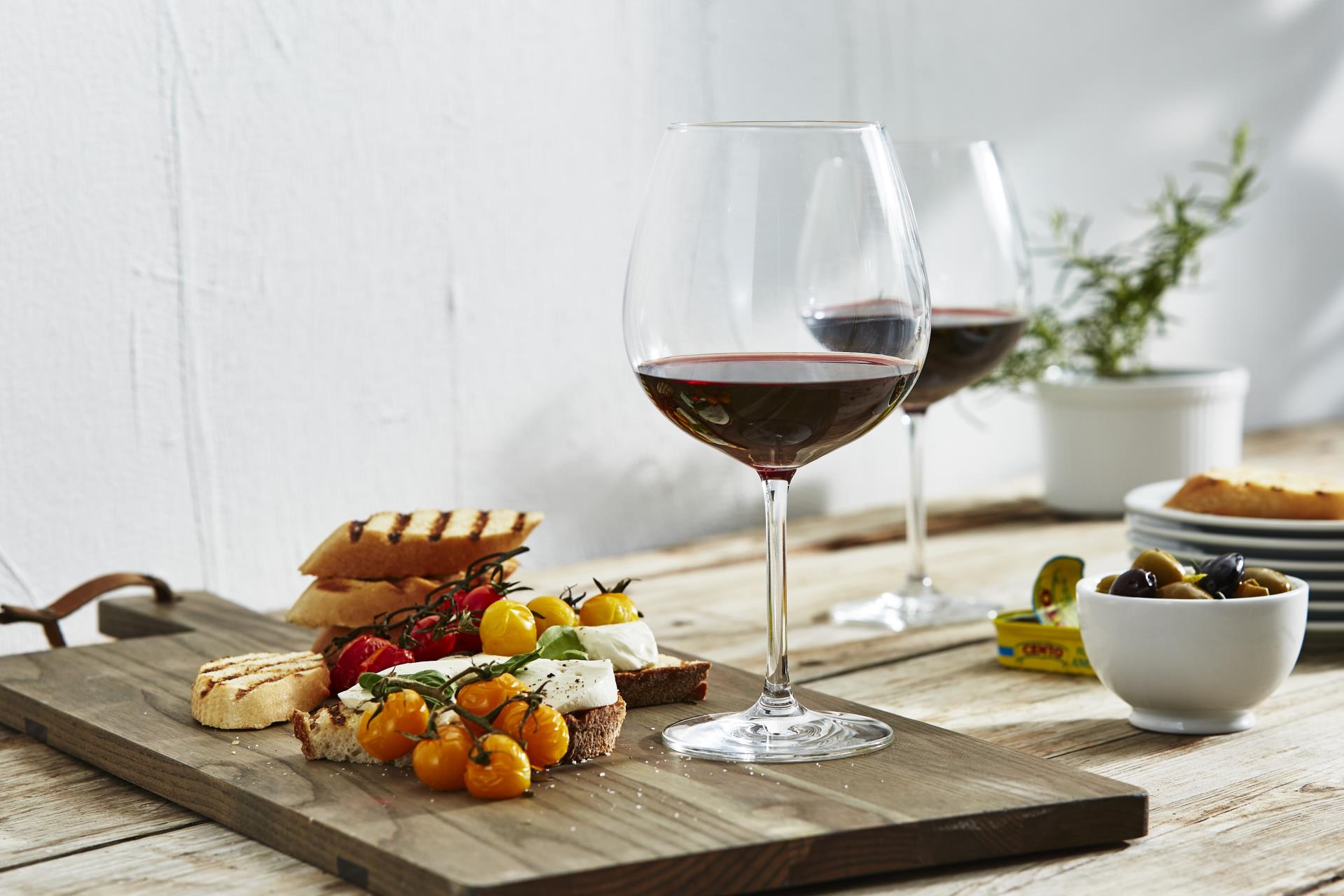
The holidays are here and, if you’re anything like us, that can only mean one thing: wine and cheese parties!
There’s just something so timeless and sophisticated about inviting over your closest friends, donning your ugliest Christmas sweater and indulging your senses with excellently paired sips and snacks.
And we get it—the idea of sifting through the grocery aisles trying to find the right cheese to complement that big, bold cabernet or crisp pinot gris can feel daunting—which is where we come in.
We’ve tapped our entertaining experts for their guidance on everything wine and cheese—from pairing tips and tricks to a quick reference pairing guide, we’re here to answer all your questions.
Hungry for more? Shop our collection of cheese knives and charcuterie boards to find everything you need to host a wine and cheese party your friends will never forget.
There’s an old adage in the wine world: “what grows together, goes together.” And it’s a good rule of thumb to follow.
See, there’s this thing called terroir which describes both the environment (soil, topography and climate) in which the wine was grown and produced and the flavor that particular environment imparts. In the same way the terroir will impact the wines of that area, so will the food produced from the animals that graze there.
For example, sauvignon blanc is famously grown and produced in the Loire Valley of France. The soil in the region is full of minerals, which in turn imparts an earthy minerality into the flavor, aroma and texture of the wine. This same flint and earthen-like profile can be found in chèvre, a creamy, tangy goat cheese that packs an intense and earthy flavor and is mainly produced in, you guessed it, the Loire Valley!
Like fries dipped in ice cream, sweet wines paired with salty, funky cheeses like Gorgonzola or blue cheese is a winning combination.
That’s because the salt in the cheese amplifies the sweetness in the wine, which in turn helps to mellow and balance the “funk” in the cheese, making it taste creamier.
When cheese ages, its water content decreases and the fat content goes up, resulting in a richer, often saltier flavor. Big, tannic-rich wines love salty, aged cheeses like pecorino and Asiago because the tannins bind to the protein and fat in the cheese, acting as a palate cleanser between each sip and bite. The salt also increases the fruitier, sweeter flavors in wine, which helps to mellow the tannins.
This also makes the opposite true: young or fresh cheeses, like mozzarella and ricotta, have a lower fat content and the flavor gets choked by the tannins in the wine. If you prefer red wine to white, aim for lighter, lower-bodied reds like Beaujolais or a sparkling Lambrusco.
If you enjoy the buttery, silky mouthfeel of chardonnay, try pairing it with a creamy cheese like Brie. The textures complement each other well and, depending on where the wine is from, could offer notes of minerality that pair well with the cheese’s bloomy rind.
Or play around with contrasting textures—sparkling wines are excellent complements to cheeses like Camembert or Muenster, as their high acidity and carbonation offer a palate-cleansing effect.
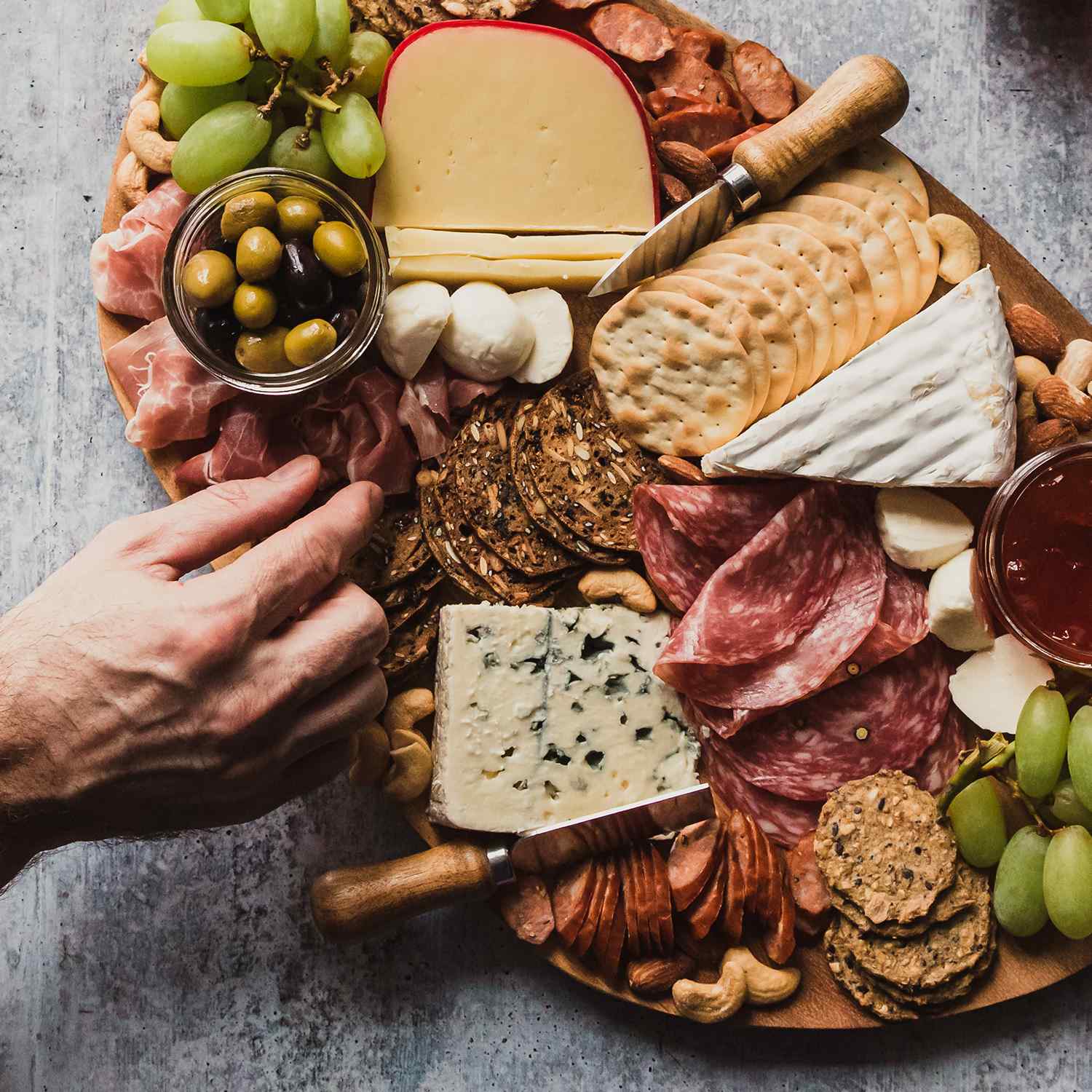
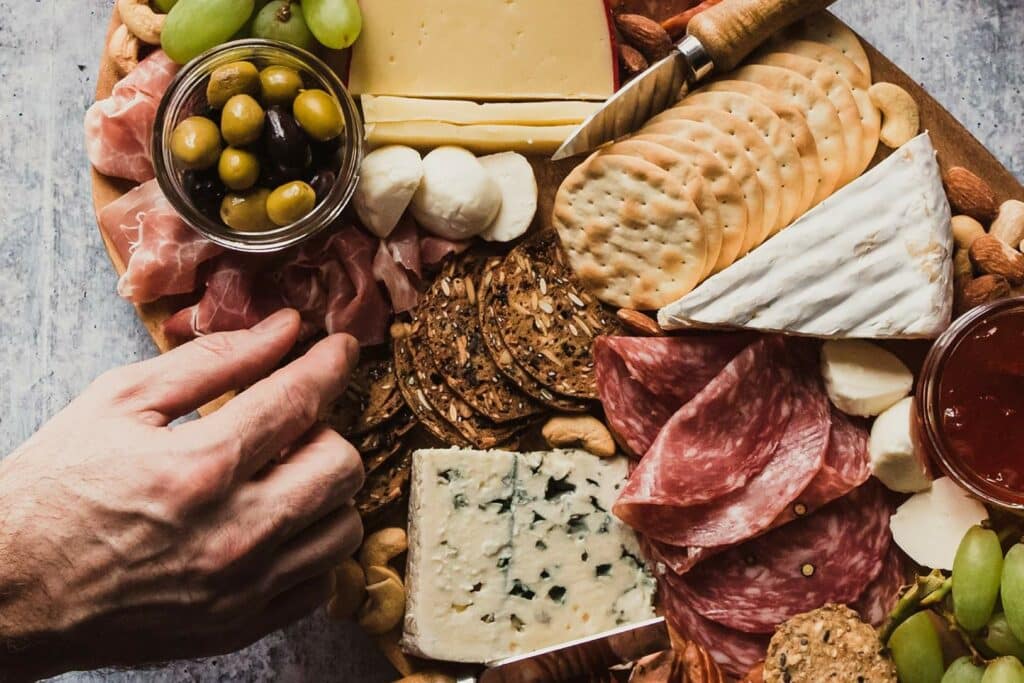
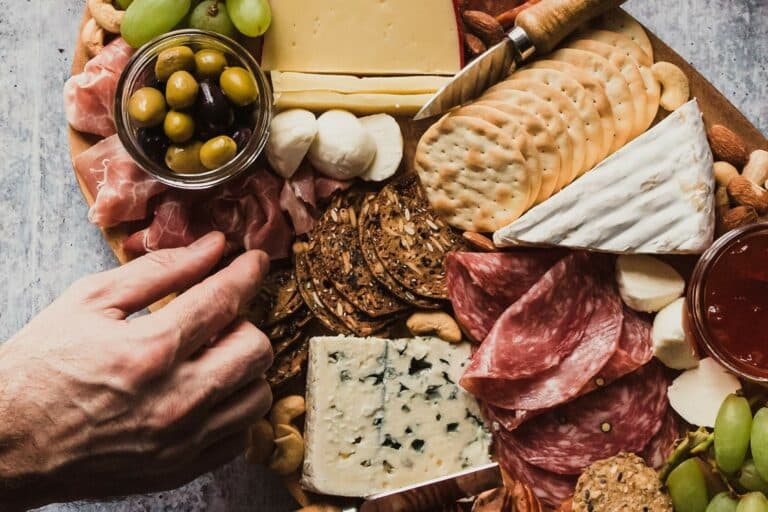
By now, we’re all very familiar with charcuterie boards—the cascading, swirling, organized chaos of cured meats and cheeses are a welcome sight at parties. And they almost always feature nuts and fruits. Why? Because the natural juicy, tangy or sweet nature of the fruits and the salty, nutty flavor of, well, nuts go wonderfully with cheese.
When in doubt, use this as a guidepost: imagine what food would pair best with a cheese, and find a wine with a similar flavor profile.
If you take nothing else from this guide, consider this the most steadfast rule. Here’s why:
Like wine, cheese runs the gamut from delicate to bold with big flavors, and those flavors typically coincide with the age of the cheese.
In the same way that young (read: unaged) wines have more fruit, floral, citrus, herb or spice notes, young, fresh cheeses have more delicate, lighter flavors. Aged wines (i.e., wines that have been allowed to sit in oak, stainless steel or in the bottle) typically have more complex flavors—think oak, smoke, vanilla, minerality, earthiness and dried fruits—intermingled with their primary fruit flavors. The same goes for aged cheeses; they typically will have more complex, savory flavors than their fresher counterparts.
So, what does that all mean? Simply put, try to pair wines with cheeses based on their respective intensities. Older cheeses pair best with wines that have more body and complexity while fresh cheese does best with lighter, fruitier or crisper wines. For cheeses that have been aged the longest, like Grana Padano or Parmigiano-Reggiano, opt for big, bold wines with ample body and structure.
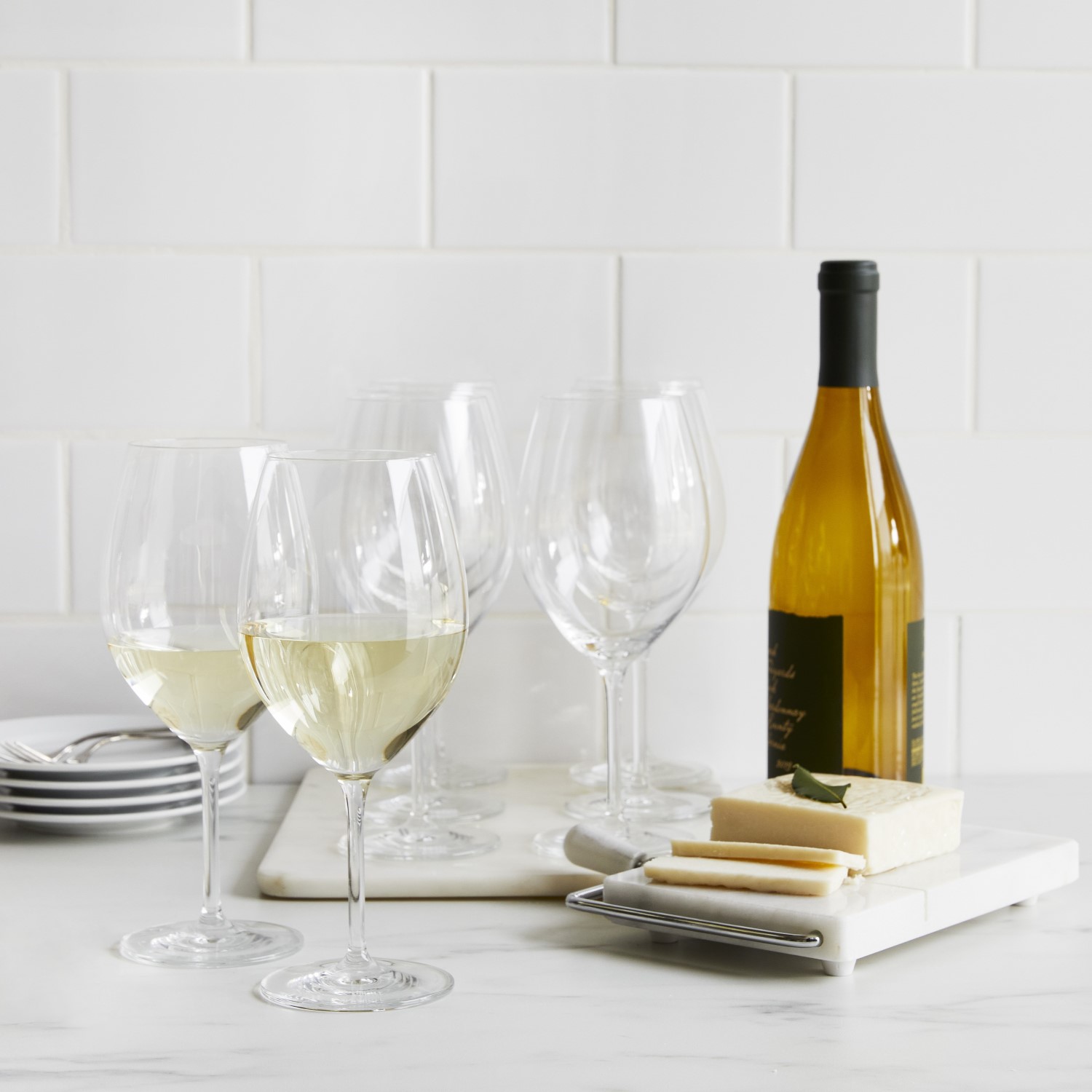
Hungry for more? Shop our collection of cheese knives and charcuterie boards to find everything you need to host a wine and cheese party your friends will never forget.



JOIN THE CONVERSATION